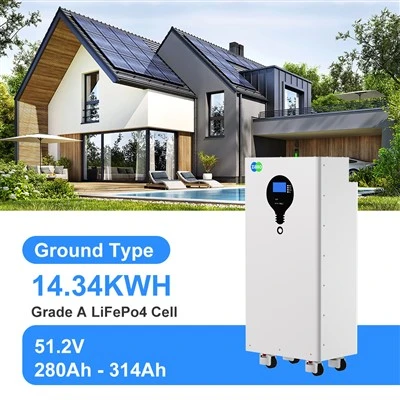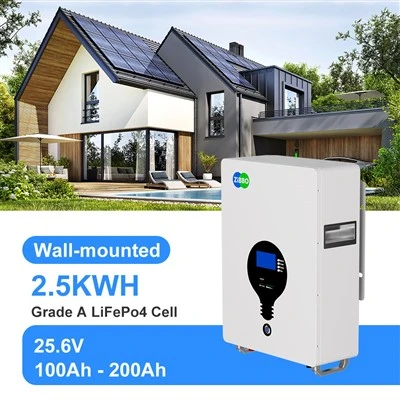


What is Customized Lithium Battery
A lithium-ion or Li-ion battery is a type of rechargeable customized lithium battery that uses the reversible intercalation of Li+ ions into electronically conducting solids to store energy. In comparison with other commercial rechargeable batteries, Li-ion batteries are characterized by higher specific energy, higher energy density, higher energy efficiency, a longer cycle life, and a longer calendar life.
Benefits of Customized Lithium Battery
Lithium is Long-Lasting
Customized lithium battery provide up to 10 times longer life than lead-acid batteries, and they still provide 80% of rated capacity after 2,000 cycles. Most lithium-ion batteries last five years or more. The average lead-acid battery lasts just two years. Lead-acid batteries also need to be maintained, requiring water replacement to avoid structural damage; if they aren't maintained properly, their life span is shortened even further. Because customized lithium battery require no active maintenance, a one-time purchase guarantees longevity.
Lithium is Quick & Efficient
Lithium can charge and discharge at a high rate providing maximum versatility for all types of applications. Fast charging minimizes downtime, and lithium's high rate of discharge is perfect for a burst of power. Lead-acid batteries must be charged in stages over a longer time, and they perform inefficiently during high discharge periods, making them less versatile than their lithium counterparts. Lithium's efficiency is unparalleled, especially under high-stress situations. Unlike lead-acid, temperature fluctuations and energy depletion barely affect lithium's power delivery. Lithium is the logical choice for applications that will exhaust the batteries or run in extreme weather.
Lithium is the Lightweight Champ
Customized lithium battery provide more energy than lead-acid batteries and are typically half the mass, reducing concerns about battery weight. Compared to other battery chemistries, lithium provides the same or greater energy at less than half the weight and size. This means more flexibility and easier installation!
-
![ZBPOWER Customized 96V 100AH Li-FePO4 for Golf Cart Batteries and Tricycles]() ZBPOWER Customized 96V 100AH Li-FePO4 for Golf Cart Batte...ZBPOWER 96V 100AH intelligent lithium battery pack (LiFePo4) has intelligent and advanced BMS patent technology. Multiple protections for voltage, current, temperature and short-circuit provide...view more
ZBPOWER Customized 96V 100AH Li-FePO4 for Golf Cart Batte...ZBPOWER 96V 100AH intelligent lithium battery pack (LiFePo4) has intelligent and advanced BMS patent technology. Multiple protections for voltage, current, temperature and short-circuit provide...view more -
![ZBPOWER Customized 48V 100AH Lithium Iron Phosphate Battery Packs]() ZBPOWER Customized 48V 100AH Lithium Iron Phosphate Batte...ZBPOWER 96V 100AH Smart Li-ion battery pack (LiFePo4) has intelligent and advanced BMS patented technology.GEBC Monitor Li-ion Battery Through cell phone APP, customers can check the battery...view more
ZBPOWER Customized 48V 100AH Lithium Iron Phosphate Batte...ZBPOWER 96V 100AH Smart Li-ion battery pack (LiFePo4) has intelligent and advanced BMS patented technology.GEBC Monitor Li-ion Battery Through cell phone APP, customers can check the battery...view more -
![ZBPOWER 72V 100AH Lithium Iron Phosphate Battery Customized for Golf Carts and Tricycles]() ZBPOWER 72V 100AH Lithium Iron Phosphate Battery Customiz...ZBPOWER 72V 100AH Smart Lithium Battery Pack (LiFePo4) has intelligent and advanced BMS patented technology.GEBC Monitor Lithium Battery Through cell phone APP, customers can check the battery...view more
ZBPOWER 72V 100AH Lithium Iron Phosphate Battery Customiz...ZBPOWER 72V 100AH Smart Lithium Battery Pack (LiFePo4) has intelligent and advanced BMS patented technology.GEBC Monitor Lithium Battery Through cell phone APP, customers can check the battery...view more -
![ZBPOWER Customized 48V 100AH Li-FePO4 for Golf Cart Batteries and Tricycles]() ZBPOWER Customized 48V 100AH Li-FePO4 for Golf Cart Batte...ZBPOWER 48V 100AH intelligent lithium battery pack (LiFePo4) has intelligent and advanced BMS patent technology. Multiple protections for voltage, current, temperature and short-circuit provide...view more
ZBPOWER Customized 48V 100AH Li-FePO4 for Golf Cart Batte...ZBPOWER 48V 100AH intelligent lithium battery pack (LiFePo4) has intelligent and advanced BMS patent technology. Multiple protections for voltage, current, temperature and short-circuit provide...view more


Why Choose us
Affordable pricing
We offer competitive pricing that caters to a wide range of customers.
Wide range of products
We provide a variety of products that cater to different customer needs.
Excellent customer service
Our customer service team is dedicated to ensuring our clients receive prompt and professional services.
Experienced workforce
Our team comprises highly skilled and experienced personnel who guarantee quality services.customized solutions.
Different Applications & Uses for Customized Lithium Battery
Customized Lithium Battery in Solar Energy Storage
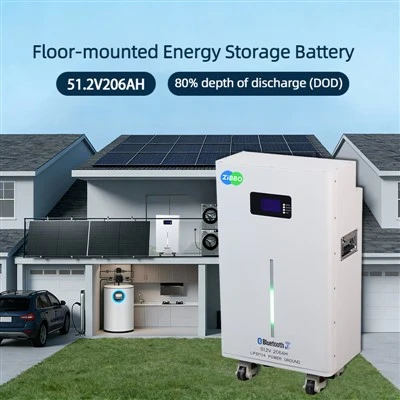
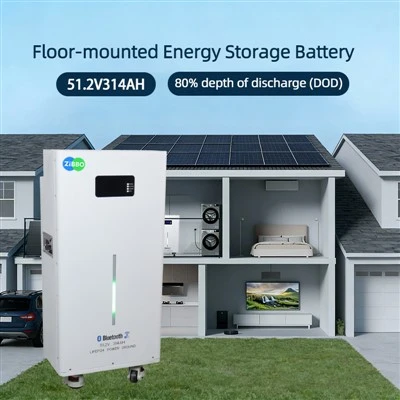
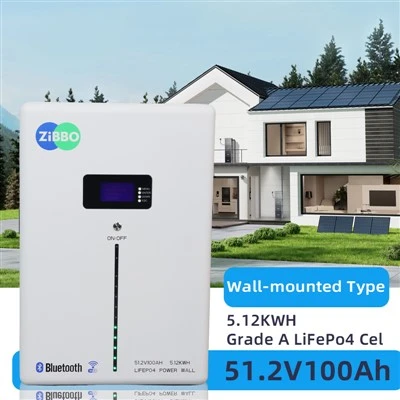
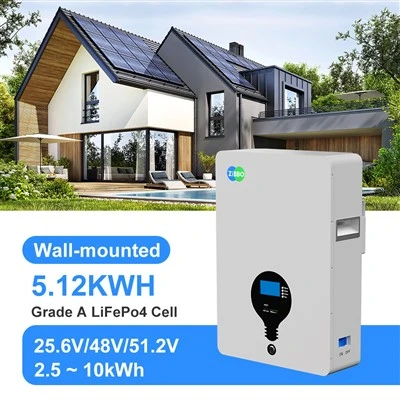
Customized lithium battery, known for their energy storage proficiency, are a perfect fit for stockpiling surplus energy harvested by solar panels. Even during sunless days or unexpected equipment maintenance, these batteries ensure there's no power interruption. Their compatibility with solar panels' charging nature and their swift charging capability make them indispensable. The rapid charge rate of lithium batteries further enables users to harness every ounce of solar power, optimizing energy storage during every sunny moment.
Lithium Technology for Emergency Power & UPS
Despite technological advancements, power inconsistencies and outages remain prevalent. This is where customized lithium battery come into play, proving indispensable for UPS or emergency power backup solutions.
Choosing a customized lithium battery over traditional generators ensures almost immediate power availability. This becomes vital when it comes to running crucial equipment that mandates uninterrupted power, including medical instruments, communication devices, and computing systems.
Lithium-ion Powered Surveillance & Alarm Solutions
Gone are the days when monitoring remote areas, vehicle fleets, or shifting job sites depended solely on a direct electricity connection. Today, Li-ion batteries have emerged as a reliable power source for surveillance and alarm systems, especially in places devoid of an electrical network.
What sets Li-ion batteries apart? Their compactness, impressive lifespan, and minimal self-discharge even when the system remains dormant. In comparison to conventional lead-acid batteries, lithium-ion variants exhibit a self-discharge rate that's a whopping ten times lower. Hence, for intermittently used systems, lithium batteries are the go-to choice.
DSLR Cameras
Up first, we have one of the more surprising examples on our list today, the DSLR camera.
Digital cameras rely heavily on lithium-ion batteries. In fact, without them, they wouldn't work at all. Companies such as Nikon and Canon would not be where they are today if it were not for the invention of the humble lithium battery.
You'll find that the batteries used in DSLR digital cameras are much smaller than a lot of the other lithium ion batteries currently on the market, making them ideal for both amateur and professional photographers.
Smart Watches
Remember when watches were used purely for telling the time? Well, thanks to the wonders of modern technology we can now use watches for all manner of different things, providing of course, they have power.
The batteries used in watches are much smaller than those used in, say, electric vehicles, but due to their 3V capacity, they can last as long as more than a decade in a digital watch which utilizes less power.
Mobility Aides
Another very common and very important use for customized lithium battery in the modern world is in mobility vehicles.
You'll find that mobility vehicles such as mobility scooters and electric wheelchairs can benefit hugely from the tech utilized in a customized lithium battery.
Needless to say, mobility aides such as electric wheelchairs, and mobility scooters, need to be operational for long periods of time. One full charge should last for hours, which is where lithium batteries enter the picture.
Customized Lithium Battery Chemistries
Lithium Iron Phosphate (LiFePO4)
Customized lithium battery materialsLithium iron phosphate is more compact and energy dense, making it an excellent choice for us in material handling applications, such as powering equipment like electric forklifts, walkie pallet jacks, and end riders.
When you plug a customized lithium battery into a device or piece of equipment, the positively-charged ions move from the anode to the cathode. The anode stores the lithium and is typically made from carbon. The cathode also stores the lithium and is made from a chemical compound that is a metal oxide.
In batteries with lithium iron phosphate chemistry, phosphate serves as the cathode material. As a result, the cathode becomes more positively charged than the anode. This, in turn, attracts negatively-charged electrons to the cathode.
A separator in the cell includes electrolytes that form a catalyst. This promotes ion movement from the cathode to the anode and back. As the electrons begin working their way toward the cathode, the battery system is designed to force them to go through the device and use that energy to generate power.
Customized lithium battery are rechargeable. When recharging, the lithium-ions go through the same process, but in the opposite direction. This restores the battery for additional use.
A battery with lithium iron phosphate chemistry offers high performance and low resistance, and enjoys a longer life cycle, greater thermal stability and enhanced safety.
Lithium iron phosphate batteries are also more tolerant to being fully charged and don’t experience as much stress as other types of lithium-ion chemistries when they endure prolonged high voltages.
Lithium Nickel Manganese Cobalt Oxide (NMC)
Lithium nickel manganese cobalt oxide chemistries are very energy dense, which means they provide a higher level of performance, if the equipment is designed to support it. The high charge and discharge rates make it a more popular choice for electric vehicles, such as e-bikes, buses, cordless power tools and other electric power trains.
But a high discharge rate is only beneficial if you plan to use the equipment for shorter periods of time. Since most material handling equipment is used for an entire 8 to 10-hour shift, or even multiple shifts, the improved performance does not offer a benefit.
This type of battery chemistry uses a combination of nickel, manganese and cobalt for the cathode. Though the inclusion of nickel gives the cell high-specific energy, this also reduces its stability.
The inclusion of manganese, on the other hand, offers low internal resistance, but also features low specific energy. Combined, however, the chemistries work together to make this type of battery a suitable choice for certain types of equipment. The increased performance comes at a price…lithium nickel manganese cobalt oxide batteries have a lower thermal runaway temperature, meaning they are less safe than LFP.
How Customized Lithium Battery Work
The basics
A customized lithium battery is made up of an anode, cathode, separator, electrolyte, and two current collectors (positive and negative). The anode and cathode store the lithium. The electrolyte carries positively charged lithium ions from the anode to the cathode and vice versa through the separator. The movement of the lithium ions creates free electrons in the anode which creates a charge at the positive current collector. The electrical current then flows from the current collector through a device being powered (cell phone, computer, etc.) to the negative current collector. The separator blocks the flow of electrons inside the battery.
Charge/Discharge
While the customized lithium battery is discharging and providing an electric current, the anode releases lithium ions to the cathode, generating a flow of electrons from one side to the other. When plugging in the device, the opposite happens: Lithium ions are released by the cathode and received by the anode.
Energy density vs. Power density
The two most common concepts associated with batteries are energy density and power density. Energy density is measured in watt-hours per kilogram (Wh/kg) and is the amount of energy the customized lithium battery can store with respect to its mass. Power density is measured in watts per kilogram (W/kg) and is the amount of power that can be generated by the customized lithium battery with respect to its mass. To draw a clearer picture, think of draining a pool. Energy density is similar to the size of the pool, while power density is comparable to draining the pool as quickly as possible.

Cathode” determines the capacity and voltage of a customized lithium battery
A Lithium-ion battery generates electricity through chemical reactions of lithium.This is why, of course, lithium is inserted into the battery and that space for lithium is called “cathode”.
However, since lithium is unstable in the element form, the combination of lithium and oxygen, lithium oxide is used for cathode.
The material that intervenes the electrode reaction of the actual battery just like lithium oxide is called “active material”.
In other words, in the cathode of a customized lithium battery, lithium oxide is used as an active material.
Anode” sends electrons through a wire
Just like the cathode, the anode substrate is also coated with active material.
The anode's active material performs the role of enabling electric current to flow through the external circuit
while allowing reversible absorption/emission of lithium ions released from the cathode.
When the customized lithium battery is being charged, lithium ions are stored in the anode and not the cathode.
At this point, when the conducting wire connects the cathode to the anode (discharge state),
lithium ions naturally flow back to the cathode through the electrolyte,
and the electrons (e-) separated from lithium ions move along the wire generating electricity.
Electrolyte” allows the movement of ions only
When explaining about cathode and anode, it was mentioned that lithium ions move through the electrolyte and electrons move through the wire.This is the key in enabling the use of electricity in a customized lithium battery.
If ions flow through the electrolyte, not only can't we use electricity but safety will be jeopardized.
Electrolyte is the component which plays this important role.It serves as the medium that enables the movement of only lithium ions between the cathode and anode.For the electrolyte, materials with high ionic conductivity are mainly used so that lithium ions move back and forth easily.
Separator”, the absolute barrier between cathode and anode
While the cathode and anode determine the basic performance of a battery, electrolyte and separator determine the safety of a customized lithium battery.
The separator functions as a physical barrier keeping cathode and anode apart.It prevents the direct flow of electrons and carefully lets only the ions pass through the internal microscopic hole.Therefore, it must satisfy all the physical and electrochemical conditions.
Commercialized separators we have today are synthetic resin such as polyethylene (PE) and polypropylene (PP).
Asked Questions
As one of the leading customized lithium battery manufacturers in China, we warmly welcome you to wholesale high-grade customized lithium battery for sale here from our factory. All customized products are with high quality and competitive price.
20kwh all in one energy storage, 51 2V 20kw Rack Energy Storage System, Tiger Shark 5 E bike Battery 36V 48V